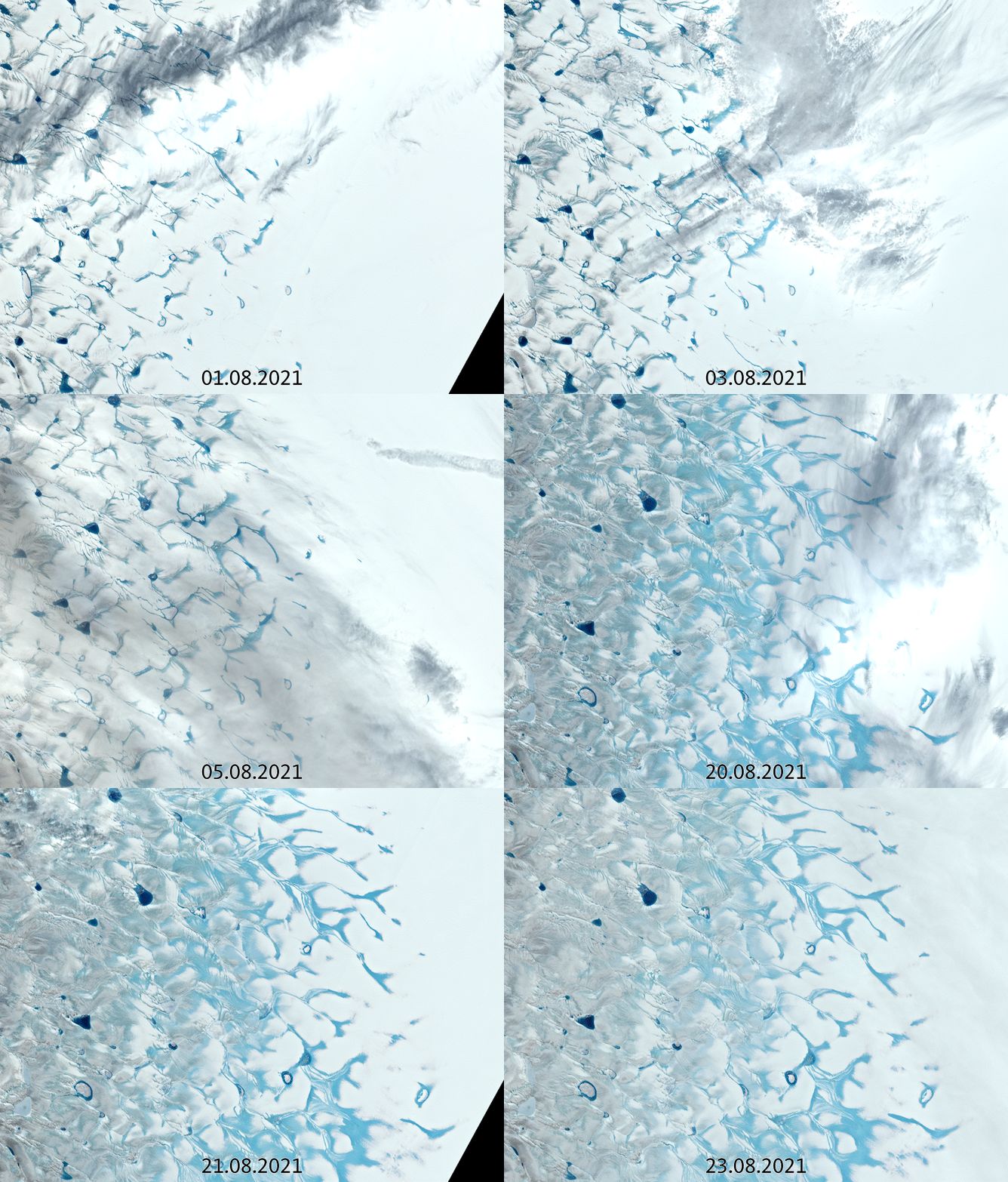
The never-before-seen rainfall, on 14 August 2021, made headlines around the world. The upper-most parts of Greenland’s enormous ice cap used to be too cold for anything other than snow to fall, but not anymore.
What caused this extreme event and how did it affect the ice? Researchers from the Department of Glaciology and Climate at the Geological Survey of Denmark and Greenland (GEUS) in collaboration with colleagues from France and Switzerland have since scrutinised these questions and come up with the answers.
It didn’t only rain at Summit Camp – rain was measured by new automatic weather stations placed across the ice sheet by GEUS’ ice-sheet monitoring projects Programme for Monitoring the Greenland Ice Sheet (PROMICE) and Greenland Climate Network (GC-Net).
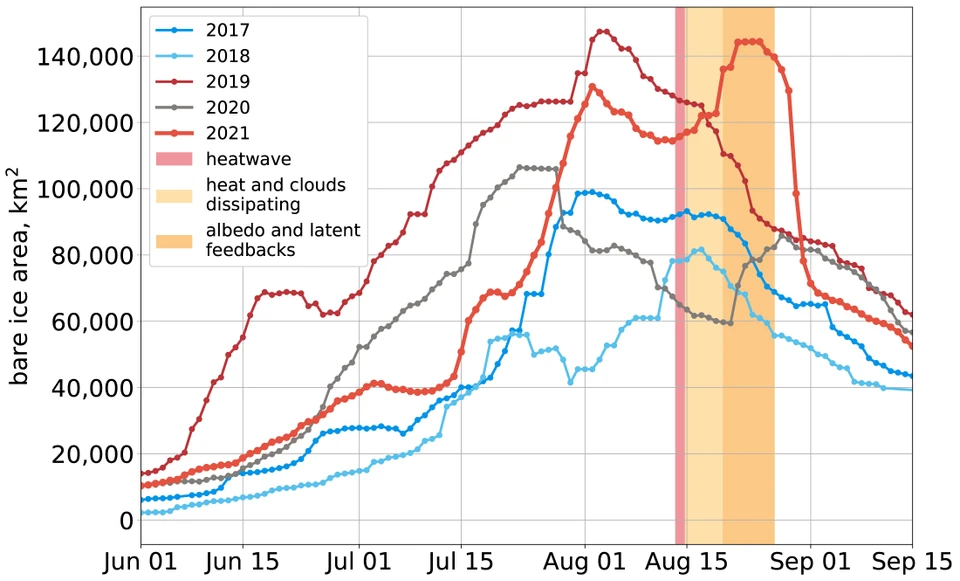
Studying detailed data from these stations alongside measurements of surface reflectivity, or albedo, from the Copernicus Sentinel-3 satellite mission and information on atmospheric circulation patterns, the researchers discovered that the rain had been preceded by a heatwave at a time of year when seasonal melting is usually slowing down.