The Paleoclimate Research Group at GEUS is a cross-departmental initiative. We are a multidisciplinary group working across timescales to address the key processes and environmental impacts of our changing climate.
Paleoclimate
Why is it important to study past climate?
Understanding paleoclimate has never been more relevant than today.
During the geologically brief time that humans have walked the Earth, we have changed the planet in unprecedented ways. Since the dawn of industrialism, anthropogenic fossil fuel burning has led to increased pCO2 in the atmosphere and rapid warming that is expected to accelerate in the coming decades.
The impact of these changes has consequences for the physical and environmental processes that operate on both short and long timescales within the geosphere, hydrosphere/cryosphere, atmosphere and biosphere. The cascading effects on biogeochemical cycles and ecosystem processes have critical consequences that are already impacting society. Palaeoclimate archives and proxy datainformation extracted from historical and geological records is essential for understanding interconnected Earth System processes and for narrowing the knowledge gaps on the causes, tipping points and consequences of climate change.
The Paleoclimate Research Group
Paleoclimate as a research field is highly multi-disciplinary, and thus our group includes experts in geophysics, geochemistry, paleoecology, paleoceanography, paleogenetics, biostratigraphy, sedimentology, and numerical modeling, among other disciplines. The group has a primary focus on Greenland and Denmark, and the wider Arctic and North Atlantic regions, but is also engaged in projects elsewhere.

Contact us
John Hopper
Professor
Geophysics and Sedimentary Basins
Paul Knutz
Professor
Near Surface Land and Marine Geology
Kasia Sliwinska
Senior Researcher
Geo-energy and Storage
People
Paleoclimate researchers at GEUS cover a broad range of topics across several disciplines and timescales. Here is an overview of who we are.
Department of Marine Geology
# Paleoceanography, Polar margins, Greenland Ice Sheet, Quaternary and Cenozoic
Ole Bennike
Senior Researcher
Near Surface Land and Marine Geology
# Quaternary climate, Holocene sea-level changes, palaeogeography
Lara F. Perez
Senior Researcher
Near Surface Land and Marine Geology
# Arctic-Antarctica; polar margins; seismic-stratigraphy; core-log-seismic correlation; sedimentary processes
Department of Glaciology and Climate
# Arctic paleoceanography, Marine ecosystems, Sea ice proxies, Holocene climate, Greenland.
Camilla Snowman Andresen
Professor
Glaciology and Climate
# Greenland fjord sediments, Holocene, Eemian, Ice-ocean interactions, Climatic teleconnections
# Paleogenetics, Marine ecosystems, Sea ice, Biodiversity, Protists
# Paleoceanography; marine sediment cores; foraminifera; Greenland; Iceland
Kristian Kjellerup Kjeldsen
Senior Researcher
Glaciology and Climate
# Greenland ice sheet evolution, Holocene ice extent, ice-ocean interactions; sea-level changes
Nanna Bjørnholt Karlsson
Professor
Glaciology and Climate
# Greenland ice sheet evolution, ice-flow modeling, ice-penetrating radar, past ice extent
Anne Munck Solgaard
Senior Researcher
Glaciology and Climate
# Ice flow modeling, ice dynamics, Greenland Ice Sheet evolution
Signe Hillerup Larsen
Researcher
Glaciology and Climate
# Ice flow modeling, ice dynamics
# Arctic paleoceanography, marine sediment cores, dinocysts, Holocene, Greenland
Department of Geoenergy and Storage
Kasia Sliwinska
Senior Researcher
Geo-energy and Storage
# Cretaceous to Neogene, organic biomarker proxies, palynology, stratigraphy, North Atlantic region, IODP
# Cretaceous to Neogene, organic biomarker proxies, palynology, stratigraphy, North Atlantic region, IODP
# Cretaceous-Paleogene, Arctic dinocysts, paleoenvironment, paleoclimate
# Boreal ammonite and belemnite taxonomy, biostratigraphy and palaeobiogeography; Greenland; Early Cretaceous
Department of Geophysics and Sedimentary Basins
John Hopper
Professor
Geophysics and Sedimentary Basins
# Ocean gateways and tectonics, paleographic reconstructions, geodynamics, PETM
Erik Skovbjerg Rasmussen
Emeritus
Geophysics and Sedimentary Basins
# Miocene, Paleoclimate, Palaeogeography, Prediction of lithology
Thomas Funck
Professor
Geophysics and Sedimentary Basins
# Oceanic gateways, Large Igneous Provinces, marine seismic studies, geodynamics
Department of Hydrology
# Groundwater, recharge, temperature, tracers, age

Projects
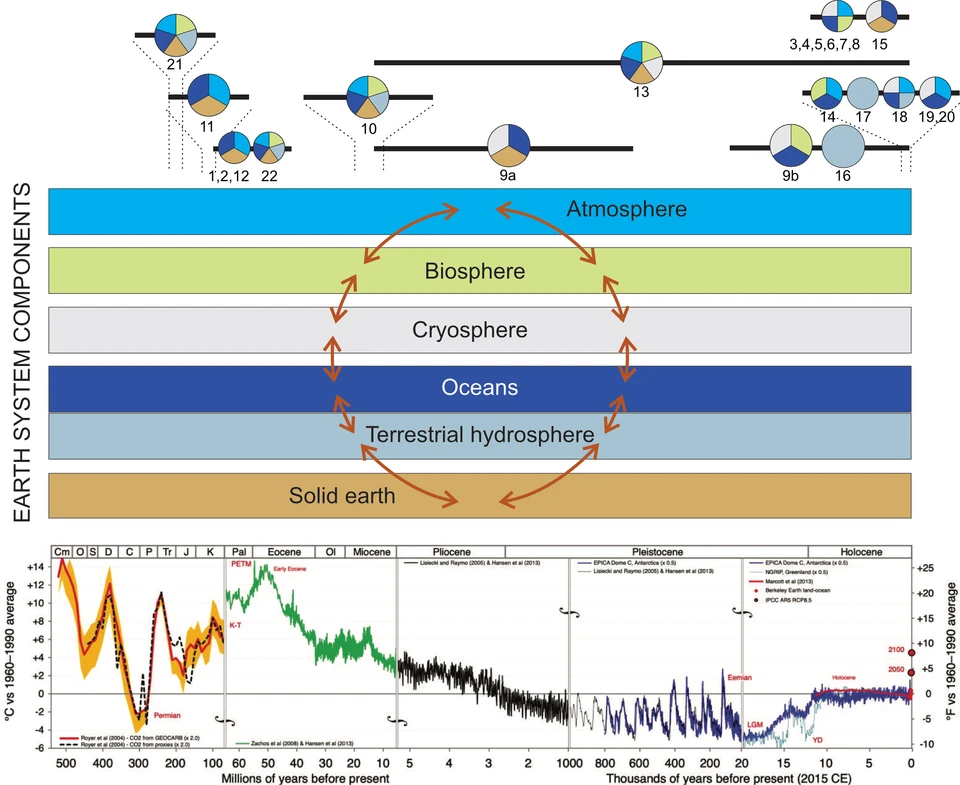
Most paleoclimate projects at GEUS involve interactions between several Earth System components. While a large majority of the projects are focused on recent (Anthropocene) and Holocene time periods, research projects at GEUS cover the entire Cenozoic era (the past ca. 66M years), and some projects include time periods in the Mesozoic and Paleozoic.
Research projects
PORO-CLIM: Surveying the seabed beneath POrcupine & ROckall basins to measure the pace of deep-time CLIMate change.
Project to investigate Iceland-plume/ridge interaction and impacts on climate, in particular the PETM
About
Funding Source(s): PiP, Eurofleets, Irish Marine Institute
Period: 2021 - 2022
Region: Porcupine Basin offshore Ireland
Techniques/proxies: seismic reflrection and refraction
Project Website: https://www.poro-clim.org
John Hopper
Professor
Geophysics and Sedimentary Basins
Quantifying the volcanic carbon flux into the early Eocene atmosphere during formation of the North Atlantic igneous province
About
Funding Source(s): Geocenter bevilling
Period: 2020 - 2022
Region: North Atlantic, Northeast Greenland
Techniques/proxies: Argon geochronology, seismic interpretation
John Hopper
Professor
Geophysics and Sedimentary Basins
Towards a blue Arctic Ocean - constraining the response of arctic marine ecosystems to cryosphere changes during the Holocene
About
Funding Source(s): DFF Sapere Aude Group Leader grant
Period: 2020 - 2023
Region: Arctic Ocean outflow shelves (NW Greenland and NE Greenland)
Techniques/proxies: Biogenic proxies, microfossils, sea ice biomarkers, sedimentary ancient DNA, model-data comparisons
Material/data: Marine sediment cores from NW and NE Greenland
Read more (in danish): Fremtidens klimaeffekter i Arktis skal aflæses i havbunden
GreenShift - Greenland fjord productivity under climate change
Greenland fjords, modulated by ice-ocean interactions, are among the most productive ecosystems in the Arctic and have sustained the livelihood of local communities in Greenland for millennia. Understanding the impact of the ongoing cryosphere changes on Greenland fjord productivity has important socio-economic implications and it also advances knowledge of the CO2 ocean sink, buffering climate change.
Read more: Greenland fjord productivity under climate change (GreenShift)
About
Funding Source(s): Geocenter bevilling
Period: 2018 - 2021
Region: Greenland fjords (Godthåbsfjord and Young Sound)
Techniques/proxies: Sedimentology, diatoms, dinocysts, biogenic silica, CN, satellite data, monitoring data (GEM), climate models
Holocene paleoceanography of northern Baffin Bay
Ocean and sea ice variability in northern Baffin Bay (Danish-Canadian collaboration)
Read more: Greenland fjord productivity under climate change (GreenShift)
About
Funding Source(s): GreenEdge, ArcticNet
Period: 2018 - 2022
Region: Northern Baffin Bay
Techniques/proxies: multiproxy analyses
Material/data: Marine sediment cores
Read more: Greenland fjord productivity under climate change (GreenShift)
POLARC - High Arctic Polynyas in a changing climate
En række store havområder uden havis er ekstremt vigtige for livet i Arktis om vinteren, men deres fremtid er usikker på grund af global opvarmning. GEUS-forsker har netop fået penge til at klarlægge dette.
About
Funding Source(s): Marie Curie Fellowship - European Commision
Start/end: 2019 - 2021
Region: High Arctic
Techniques/proxies: Sedimentology, foraminifera, dinocysts, CN, BSi, climate modelling
Material/data: Marine sediment cores
Read more (in danish): Fremtiden for havisfri oaser i Arktis klarlægges via fortiden
ICEPRINT - Sea ice microalgae DNA fingerprints as proxies in past climate studies
Det vides med sikkerhed, at Indlandsisen vil øge sin afsmeltning i et fremtidigt varmere klima. Der er dog stor usikkerhed om, præcis hvor meget vi skal forvente, at havniveauet vil stige som følge heraf. Denne store usikkerhed hænger sammen med, at vi ikke forstår de nøjagtige fysiske processer involveret i afsmeltning af særligt udløbsgletsjere, dvs. de gletsjere, der munder ud i havet.
Read more (in danish): Kan fossilt DNA fra mikroalger forudsige skæbnen for Arktis’ havis?
About
Funding Source(s): Marie Curie Fellowship - European Commision
Period: 2020 - 2022
Region: Nares Strait/northern Baffin Bay; NE Greenland
Techniques/proxies: Environmental and sedimentary ancient DNA
Material/data: Sea ice cores, water samples, and marine sediment cores
Past and future dynamics of the Greenland Ice Sheet - what is the ocean hiding?
Det vides med sikkerhed, at Indlandsisen vil øge sin afsmeltning i et fremtidigt varmere klima. Der er dog stor usikkerhed om, præcis hvor meget vi skal forvente, at havniveauet vil stige som følge heraf. Denne store usikkerhed hænger sammen med, at vi ikke forstår de nøjagtige fysiske processer involveret i afsmeltning af særligt udløbsgletsjere, dvs. de gletsjere, der munder ud i havet.
Read more (in danish): Fortidens ændringer i Indlandsisen og havstrømmene omkring Grønland
About
Funding Source(s): Villum Fonden - YIP
Period: 2015 - 2021
Region: Greenland fjords
Techniques/proxies: IRD, biomarkers, foraminifera, ice flow modelling
Material/data: Fjord sediment cores
Read more (in danish): Fortidens ændringer i Indlandsisen og havstrømmene omkring Grønland
Camilla Snowman Andresen
Professor
Glaciology and Climate
ENIGMA - Early Evolution of Icehouse Greenland - Intergrating Models and Archives
Overall aim is to provide data and results that can shed light on ice-ocean-climate interactions around Greenland and support an IODP proposal on the Cenozoic evolution of the Greenland Ice Sheet (CENICE); 909full2.
About
Funding Source(s): Geocenter bevilling
Period: 2019 - 2022
Region: Baffin Bay and Greenland shelves
Techniques/proxies: Palyno/micro strat, C-14, IRD, stable & cosmo isotopes, biomarkers, LA-ICP-MS
Material/data: Seismics, cores, cuttings
Paul Knutz
Professor
Near Surface Land and Marine Geology
Sea–level changes during the Miocene Icehouse Earth under high atmospheric CO2 (SealMICO2)
Fossil fuel consumption over the last century has resulted in a drastic increase in atmospheric carbon dioxide (ρC02) from pre-industrial levels of ~280 ppm, to over 400 ppm in September 2018 – values not exceeded for millions of years. According to IPPC the increased CO2 have impact not only on temperatures but also on the sea-level. It is estimated that by the end of this century the sea-level will have increased up to 100 cm. The low topography and long coastline makes Denmark especially sensitive to even minor sea-level changes.
Read more: SealMICO2
About
Funding Source(s): Geocenter bevilling
Period: 2011 - 2021
Region: North Sea
Techniques/proxies: biomarkers, pollen, dinocysts, d13C, inorganic geochemistry, clumped isotopes, seismic
Material/data: Sdr. Vium sediment core, sesmic
Kasia Sliwinska
Senior Researcher
Geo-energy and Storage
mid-Cretaceous climate in the High Arctic region
Characterize high Arctic paleoenvironments during the mid-Cretaceous greenhouse world (incl. OAE 2) using marine sediment cores from Baffin Bay, recovered by IODP Expedition 344S.
About
Funding Source(s): ECORD
Period: 2020 (possibly postponed until 2021 due to COVID-19)
Region: Baffin Bay
Techniques/proxies: Biomarkers (isorenieratane, lycopene)
Material/data: Sediment core
Kasia Sliwinska
Senior Researcher
Geo-energy and Storage
PVOLC - Volcanic forcing and Paleogene climate change
Accepted ICDP proposal, although co-financing is still needed, plus Denmark needs to become a member of ICDP. The goal of this application is to complete two onshore boreholes in northwest Denmark, where a near complete marine succession containing hundreds of volcanic ash layers is preserved, covering an interval from 67 to 48 million years ago.
About
Funding Source(s): ICDP
Period: Deadline for achieving co-financing and membership is June 2023.
Region: Limfjorden
Techniques/proxies: Palynology, micropalaeontology, isotopes, stratigraphy, biomarkers, geochemistry geochronology, tephra and volcanic proxies etc
Material/data: Cores
Kasia Sliwinska
Senior Researcher
Geo-energy and Storage
IODP Exp. 400
IODP proposal (909full2) to drill along a transect across the northwest Greenland margin extending from the shelf to Baffin Bay where thick Cenozoic sedimentary successions primarily reflect the evolution of the northern GrIS (NGrIS). The overall aim is to investigate the full range of forcing and feedbacks - oceanic, atmospheric, orbital, tectonic - that influence the GrIS over a range of time scales, as well as conditions prevailing at the time of glacial inception and deglacial to interglacial periods.
About
Funding Source(s): IODP
Period: Recommended to the Joides Resolution facility board for scheduling (likely 2022 or 2023).
Region: Baffin Bay and Greenland shelves
Techniques/proxies: Sedimentology, biostratigraphy, stable isotopes, paleomagnetism, biomarkers, eDNA, cosmogenic isotopes.
Material/data: Cores, borehole logs
Paul Knutz
Professor
Near Surface Land and Marine Geology
Building understanding of Greenland ice sheet change through Marine Limit and Relative Sea-Level databases
Building Holocene marine limit and relative sea-level databases.
About
Funding Source(s): Carlsberg
Period: Mid 2022 - end 2024
Region: Greenland
Material/data: Data from published/unpublished records
Kristian Kjellerup Kjeldsen
Senior Researcher
Glaciology and Climate
HOVER (GeoERA): Hydrological processes and Geological settings over Europe controlling dissolved geogenic and anthropogenic elements in groundwater…
The main objective is to gain understanding of the controls on both natural and polluted groundwater quality across Europe using the combined expertise and data held by European geological surveys / EuroGeoSurveys - this include the age and travel time distribution of European groundwater e.g. the occurence of paleowaters ( >10 Ky) recharged during the late Pleistocene.
About
Funding Source(s): H2020 / IFD
Period: 2018 - 2021
Region: Europe
Techniques/proxies: radioactive and stable isotopes, heavy noble gases
Material/data: Groundwater samples and models
RESOURCE (GeoERA) - Resources of groundwater harmonized at cross-border and pan- European scale
Demonstrate the potentials of the harmonization of information about Europe’s groundwater resources through cross-border demonstrations projects, through harmonized characterization approaches for Karst and Chalk aquifers and through a first information product at Pan-European scale where available data is compiled and integrated to produce a map of the fresh groundwater resources of Europe including documented occurence of paleowaters within 10 x 10 km grids.
About
Funding Source(s): H2020 / IFD
Period: 2018 - 2021
Region: Europe
Techniques/proxies: Radioactive and stable isotopes, heavy noble gases
Material/data: Groundwater samples and models
GreenPlanning
Reconstructing ocean and ice sheet change on Greenland during the common era. Final goal is to quantify ice sheet melt variability and asses it's influence on climate variability in Northwest europe.
About
Funding Source(s): DFF2 - Green Transition
Period: 2021-2026
Region: Greenland fjords (Kangerlussuaq, Sermilik, Ikeq, Ikertivaq, Disko Bugt and Upernavik)
Techniques/proxies: sedimentology, micropaleontology, alkenones, ice sheet and climate modelling
Material/data: Marine sediment cores
Camilla Snowman Andresen
Professor
Glaciology and Climate
Eemian for the Future
Understanding North Atlantic (incl. Denmark) ocean variability and Greenland ice sheet change during the Eemian.
About
Funding Source(s): Geocenter bevilling
Period: 2021-2022
Region: North Atlantic (incl. Denmark and Greenland)
Techniques/proxies: sedimentology, micropaleontology, alkenones, ice sheet modelling
Material/data: Marine sediment cores
Camilla Snowman Andresen
Professor
Glaciology and Climate
ClimateNarratives
20th century climate and glacier change in Disko Bugt, West Greenland.
About
Funding Source(s): Norwegian Research Council
Period: 2022-2027
Region: Disko bugt, West Greenland
Techniques/proxies: Sedimentology, micropaleontology
Material/data: Marine sediment cores and local narratives
Read more: Climatenarratives.no
Camilla Snowman Andresen
Professor
Glaciology and Climate
Testing the volcanic vs. impact hypotheses for mass extinctions
The project will deal with events linked to large igneous provinces and/or extraterrestrial impacts; ETE, OAE1a, KPg and PETM.
About
Funding Source(s): DFF (to C. Tegner, AU)
Period: 2020-2023
Region: Multiple areas
Techniques/proxies: Geochemistry, palynology
Research expeditions
GEUS researchers regularly lead and participate in expeditions to the Arctic and North Atlantic areas to carry out paleoclimate research, including geophysical surveying, seabed sampling, sediment coring, and onshore fieldwork. Our marine expeditions cover both nearshore and offshore areas, from Greenland fjords to the central Arctic Ocean.

