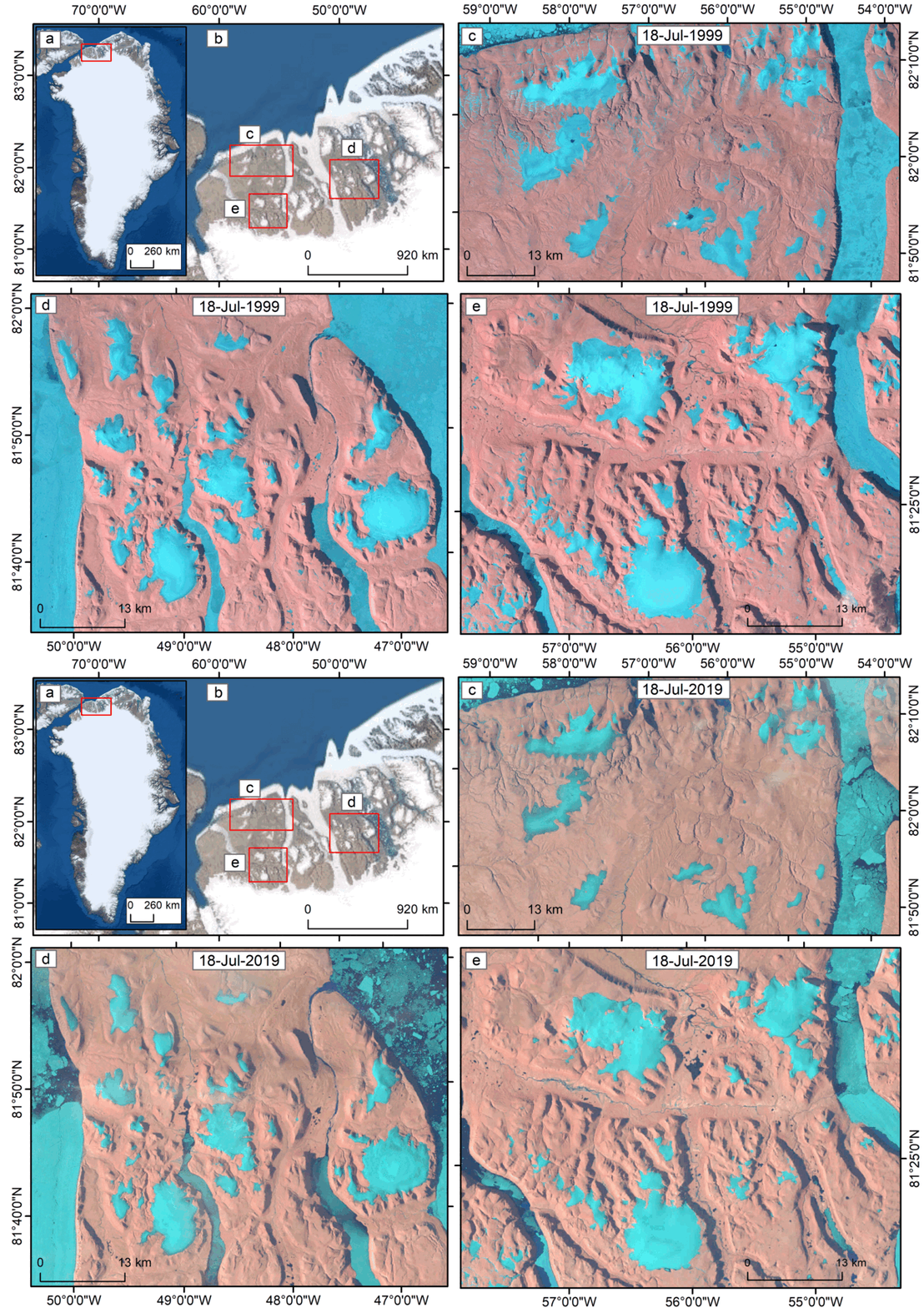
In the Arctic, temperatures are rising more than in the rest of the world, and this is causing the northernmost glaciers in Greenland to melt at record speed. This is shown in a new study by researchers from the Geological Survey of Denmark and Greenland (GEUS), DTU Space, NASA Goddard Space Flight Center, Utrecht University, University of Bristol and the University of Copenhagen.
The study focuses on smaller glaciers with no connection to the Greenland Ice Sheet. These peripheral glaciers make up only about four percent of Greenland’s ice-covered areas, corresponding to approximately the same area as Ireland (72,000 km2), but they contribute as much as 11 percent of the total loss of ice from Greenland’s ice-covered areas. Thus, they are a major contributor to global sea level rise.
“The loss of ice from these small glaciers occurs because they are more sensitive to ongoing temperature changes and therefore melt faster than we see in many other places in the Arctic,” says Professor Shfaqat Abbas Khan from DTU Space, who is the lead author of the paper just published in Geophysical Research Letters.